Our Team

Danielle Stevenson, PhD
Danielle Stevenson is a pioneering mycologist, environmental scientist, and educator specializing in mycoremediation and sustainable practices. She holds a PhD in Environmental Toxicology from the University of California, Riverside, and her dissertation was “Phyto-Mycoremediation of Brownfields in Southern California.” Danielle has dedicated her career to harnessing the power of fungi to address environmental challenges such as soil contamination, pollution, and ecosystem restoration. Her innovative work bridges the gap between science, community action, and ecological stewardship.
Through her research, outreach, and advocacy, Danielle Stevenson has become a leading voice in regenerative environmental practices, inspiring others to reimagine their relationships with nature and the built environment. Her work demonstrates the transformative potential of fungi to heal not only ecosystems but also the communities that depend on them.
Executive & Science Director, Founder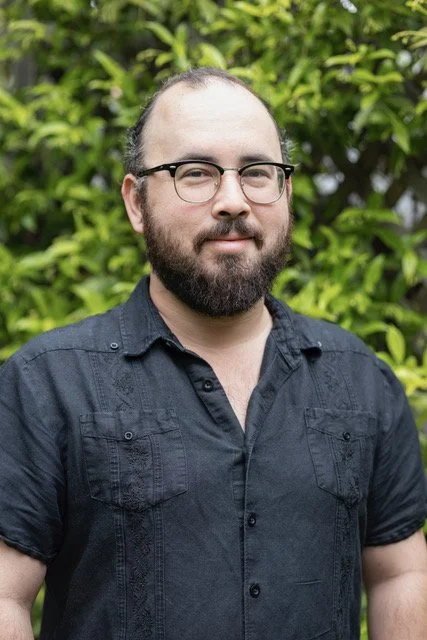
James Oliver
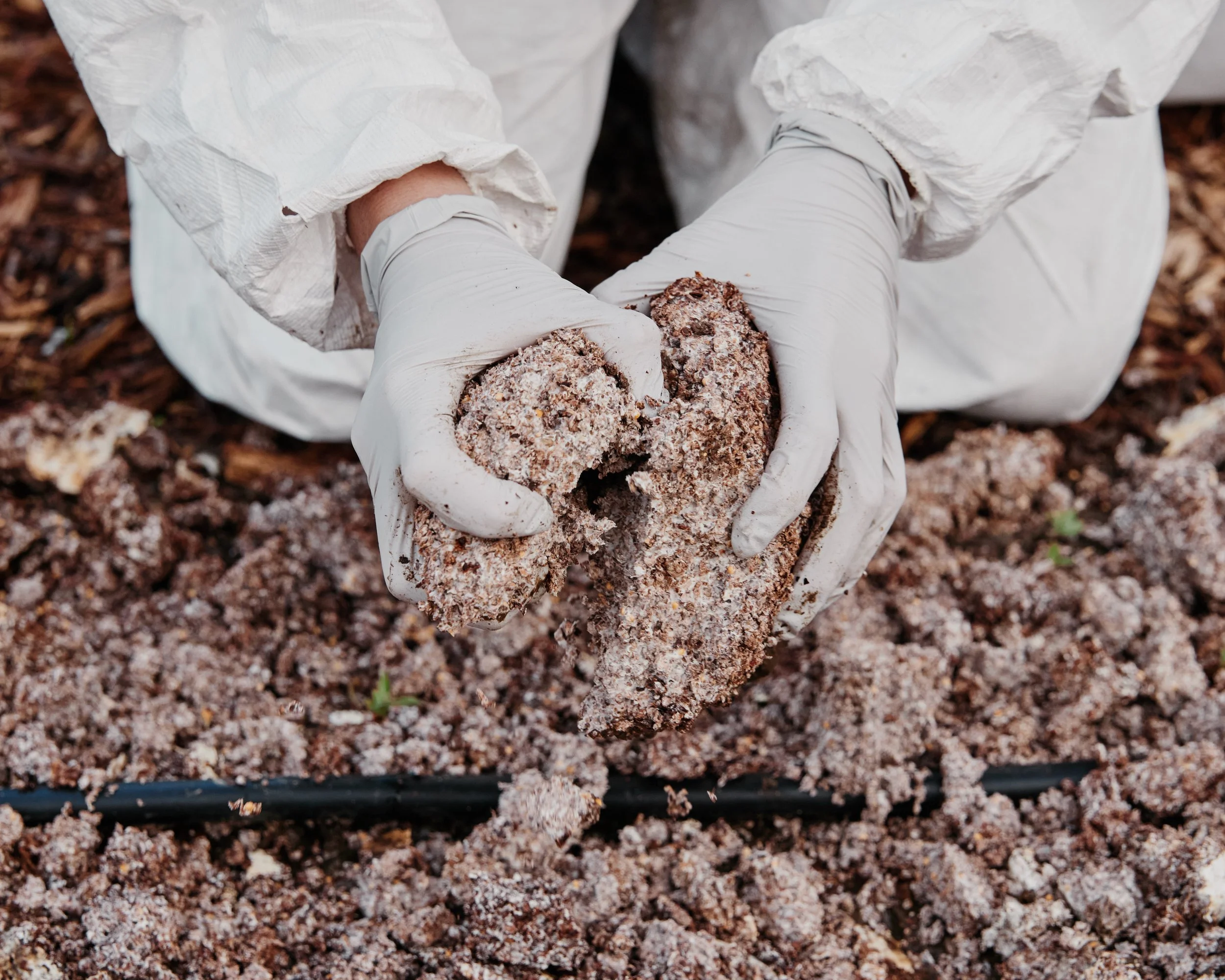
James Oliver-Peña coordinates work between CAER’s laboratory and field work: producing fungal inoculum, developing site sampling plans, implementing site installations, training interns for soil analysis, and carrying-out laboratory experiments. He is a community mycologist and soil scientist, born and raised in Venice, California. His studies in philosophy and time in the Olympic National Forest cultivated a deep curiosity in the intersection of life and death, namely fungi. In his ten-plus years of culturing microbes, fungi, and cells with friends, labs, and community, he explores the intersections of microscopy, bioremediation, human health, urban and SoCal soil microbiomes, and a sense of self entangled with microbes. He is the co-founder of Pacific Coast Cultures, a business dedicated to education and community about microbial relationships in food and ecologies. He has worked professionally and personally with organizations, including Loyola Marymount, UCLA, CAP-LA, LA Compost, Soil Food Web School, Santa Monica Community Gardens, Climate Action Santa Monica, City of Santa Monica, Santa Monica Great Park Coalition, Metabolic Studio, University of Southern California, and Los Angeles Public Library, and is currently pursuing an Environmental Engineering Masters at LMU.
Lab & Field Manager, Co-Founder
Programs & Operations Manager, Co-FounderShanhuan Manton
Shanhuan brings a mind for interspecies collaboration and collective co-creation of community works from their alternative pedagogy practice, and 15 years of experience in logistics and personnel management from their Film Producer and Cinematography background to support CAER’s operations. As a past Emergence Magazine Spiritual Ecology Leadership Fellow, and co-founder and steward of Sympoetic Ecofabulatory and LIOS Labs School of Ecological Remediation, their roots in radical community work support the on-the-ground
MicrobiologistTania Kurbessoian, PhD
Dr. Tania Kurbessoian, Ph.D., is a microbiologist and mycologist specializing in environmental microbiology, fungal ecology, and microbial risk assessment. Her work bridges laboratory science and field application, focusing on mmigrobial contamination, indoor air quality, and waterborne pathogen management. With a strong background in fungal ecology, Dr. Kurbessoian is particularly interested in how microbial communities respond to environmental stressors such as moisture, building material composition, and water system chemistry. She approaches remediation not only as contaminant removal, but as ecological restoration— understanding microbial succession, niche dynamics, and environmental drivers that influence regrowth and persistence. At CAER, Dr. Kurbessoian contributes advanced microbiological insight to support sustainable, science-driven remediation strategies. Her work reflects a commitment to ecological balance, public health protection, and the application of microbial science to real-world environmental challenges.
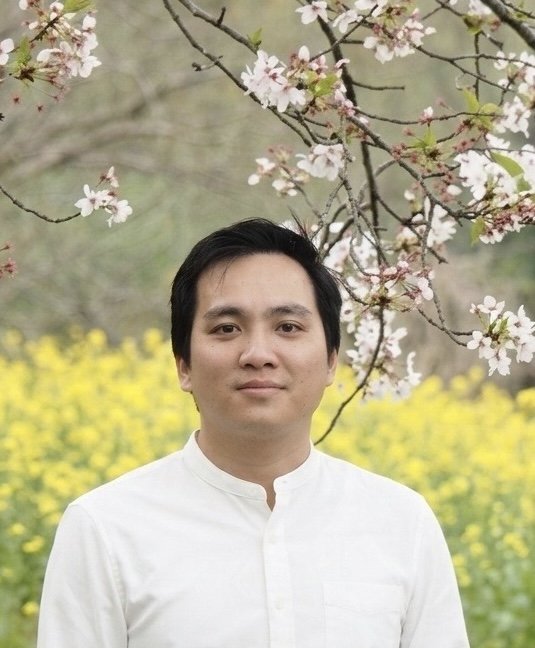
Bioremediation & Resource Recovery SpecialistDuyen Pham, D.Eng
Duyen Pham, D.Eng., is an environmental engineer and microbial electrochemical researcher with a decade of experience studying extracellular electron transfer (EET) for bioremediation, wastewater treatment, and resource recovery. His work centers on solid-phase redox mediators that enhance microbial electron flow in anoxic environments. He investigates the chemical structures, electrical properties, and redox-active components of humic substances that enable long-distance electron transfer and drive reductive dehalogenation. He also works across biological wastewater treatment and anaerobic redox bioprocesses involving pollutants, metals, nutrients, and microbe–material electron-transfer reactions.
Duyen developed patented protein-based redox mediators, including those derived from Bombyx mori silk, that strengthen microbial energy networks and stimulate CO₂-to-acetate conversion and N₂ fixation. At the National Institute for Materials Science (Japan), he engineered microbe–mineral interfaces for circular resource recovery, co-developed patented electro-bio hybrid systems for lithium extraction from seawater and brine, and contributed to phosphorus recovery technologies. He also advanced understanding of microbially influenced corrosion using sulfate-reducing bacteria as a model system.
Across his career, Duyen integrates microbial electrochemistry, environmental biotechnology, and advanced materials characterization to design scalable, low-waste, nature-aligned technologies for soil and water remediation. His work bridges fundamental redox science with applied ecological engineering, supported by multiple patented technologies and additional filings that reflect his commitment to intellectual innovation at the interface of microbes, materials, and ecological restoration.
Ecological Remediation Research FellowFrancis Sullivan
Francis Sullivan is a PhD student in Ecology and Evolutionary Biology at the University of California, Irvine. He is a soil scientist and microbial ecologist interested in how plants and microbes interact and influence nutrient cycling, soil ecosystem function, and ecological remediation. Using a combination of field-based experiments and laboratory approaches, he studies how plants and soil microbial communities can work together to support resilience and recovery in degraded ecosystems under changing climatic conditions. Beyond his research, Francis is a farmer and educator in Los Angeles, where his work connects soil science with food systems and hands-on learning.
His work is rooted as much in community as it is in science. He teaches gardening classes, sewing through the Los Angeles Public Library, and ceramics across Los Angeles, creating spaces for people to engage with land, craft, and ecology. Francis is also a writer for The Loh Down on Science, airing on NPR, where he shares scientific stories with broad public audiences.
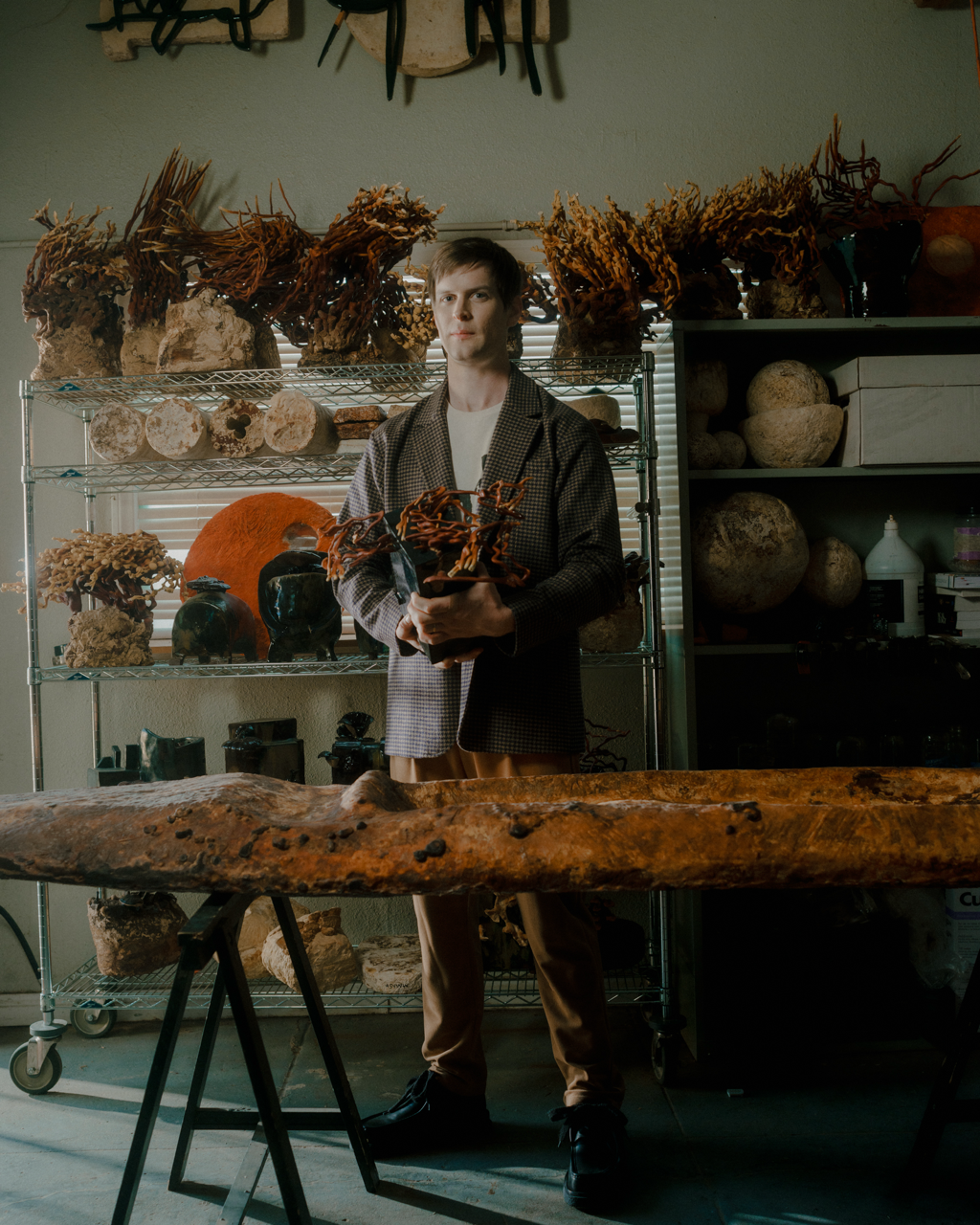
Laboratory TechnicianSam K Shoemaker
Sam Shoemaker is a Los Angeles based interdisciplinary artist whose work is a collaboration between himself and living fungi. Shoemaker’s work has been shown at Craft Contemporary, Fulcrum Arts, Armory Center for the Arts, Vielmetter, Make Room, and OCHI, among others. He was also included in World Without End: The George Washington Carver Project at the California African American Museum, an official exhibition of PST ART: Art & Science Collide presented by Getty. Shoemaker has been featured in many publications and news outlets, including the Guardian, Los Angeles Times, Galerie Magazine, W Magazine, Contemporary Art Review Los Angeles, and Graphite. Shoemaker has led numerous mushroom cultivation workshops across Southern California, at venues including Art Center College of Art and Design, Yucca Valley Material Lab, Otis College, College of the Redwoods, Vielmetter, Claremont Botanical Garden, Pitzer College, South Coast Botanic Garden, and Hahamongna Native Plant Nursery.
Professional Engineer